.jpg)
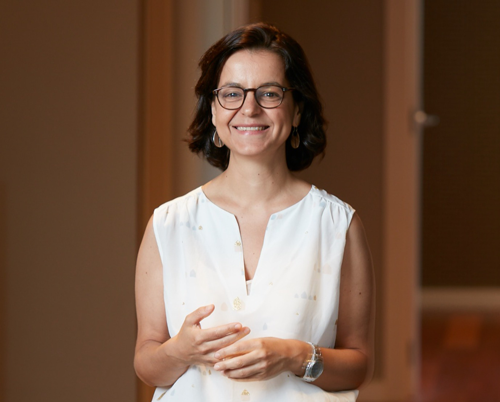
Our specialist Maria Serra (lawyer and mediator in Barcelona) explains how mediation works and what its main techniques are.
Mediation and conflict
When faced with a conflict, almost no one, not even businesses, is looking solely for a legal solution. What is increasingly clear is that what people need is a professional who can handle the conflict as a whole, whatever its nature: business, personal, or family-related.
THE MEDIATOR AS A SPECIALIST:
The mediator is the professional best placed to do this. Drawing on communication skills and techniques, active listening, neuro-linguistic programming, and even coaching, and working within a structured negotiation framework, the mediator helps those caught in a conflict to defuse it and find workable solutions.
MEDIATION IN THE company:
Conflicts arise both inside and outside the company. Internally, they develop because the people who make up a workplace, as members of an organisation, build patterns of interaction with one another, with their managers, with internal policies, and with the work itself, all of which shape how they respond when conflict emerges. Externally, conflict can arise through the various commercial relationships a company maintains with other businesses and individuals. Conflicts also arise within any kind of human relationship, family, neighbourhood, and beyond. Mediation is effective in all these situations because, at its core, it is a structured negotiation method that addresses conflict through a strategy designed above all to preserve both personal and commercial relationships, while managing the risk of reputational damage and preventing greater harm down the line.
HOW MEDIATION WORKS:
The mediator helps the parties reach an outcome that resolves the dispute, while leaving the decision on the solution entirely in their hands. To achieve this, the mediator draws on a range of techniques and structures the negotiation process according to established standards or models, three principal approaches that practice has refined over time, without this limiting the mediator's freedom to explore, creatively and within that framework, the full range of possibilities that each dispute presents.
In some cases, the mediator applies the transformative model, approaching the negotiation through the concept of "empowerment", helping the parties recover their capacity to take ownership of the conflict.
In others, the mediator uses the circular-narrative model, working from the idea that a conflict is essentially two incompatible stories. The aim is to rework those narratives and build a new shared account in which both stories can coexist.
In yet other cases, the mediator focuses on the parties' underlying interests, starting from their stated positions, then separating those positions from their actual interests in order to uncover their real needs, and generating options through objective criteria, following the Harvard Negotiation Method.
Through these approaches, the mediator helps bring structure to the accounts that the parties bring to the table, identifying emotions, fears, responsibilities, interests and genuine needs.
Where appropriate, the mediator draws on and combines all of these methods and models, adapting them to the different phases of the negotiation and to whatever the situation requires.
MEDIATION TECHNIQUES:
To work through each layer, the mediator draws on a range of techniques.
- The mediator makes constant use of questioning as a tool to encourage the parties to listen to one another and reflect on what has been said. The mediator should choose questions carefully, these may be open questions (which invite more than a yes/no answer), closed questions (short and specific), clarifying questions, hypothetical questions, probing questions, reflective or mirroring questions, circular questions, or funnel questions (asking "what for?").
- The mediator will also make use of private sessions, known as caucuses, to break through deadlocks and give each party a space to explore options without the risk of appearing weak in front of the other side. A caucus also allows a party to share information more freely, clarify misunderstandings, and define their position in a more relaxed setting.
In a caucus, the mediator helps each party analyse their Best Alternative to a Negotiated Agreement (BATNA) and their Worst Alternative to a Negotiated Agreement (WATNA). The mediator also encourages parties to move away from their opening position and put a concrete offer to the other side. - Another widely used technique is the reality check, in which the mediator encourages the parties to step back from their initial positions and view the conflict in a broader, more realistic light, helping them reframe their stances accordingly. The parties are invited to look at the dispute from a higher vantage point, to see the bigger picture.
This is sometimes described as stepping up to the "balcony view". Empathy is also a key technique in this context. The mediator places themselves in each party's position without passing judgement, building trust and a sense of safety, all while maintaining their impartiality and neutrality.
The mediator helps them reframe their narrative, which allows unspoken content to surface and prompts them to question assumptions they had taken for granted.
Paraphrasing aims to strip away the negative charge from the parties' narratives, presenting them through a different voice that leaves emotional interference behind. Through reframing and reformulation, the mediator returns the parties' story to them, but viewed through the lens of their interests and needs, moving away from the rigidity of their positions in order to open up new possibilities.
In short, mediation is a process full of possibilities, designed to preserve human relationships of every kind and to prevent conflicts from becoming entrenched. It relies on a carefully structured and creative approach to negotiation.
Barcelona, 9 February 2018
María Serra Muñoz
Lawyer and Mediator
CONTACT US