How to Claim a Debt in Spain: A Step-by-Step Legal Guide
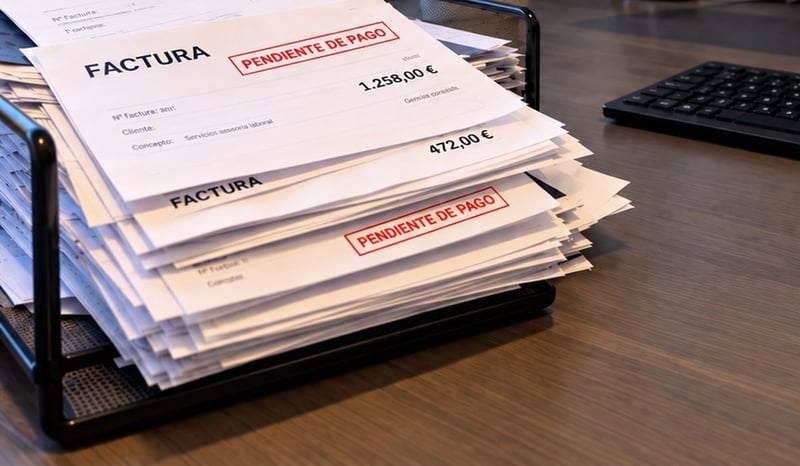
An unpaid invoice, a rent that stops coming in, a loan that is never repaid. Debts arise from all kinds of situations, but in Spain they are...
+ Info
REDOUAN ROCHDI
Spanish, Catalan, English, Arabic and Darija
I am a lawyer at Conesa Legal practising in contract law, claims for payment and commercial proceedings, and I advise companies on data protection. My work covers drafting and reviewing contracts, recovering unpaid invoices and amounts due, and conducting the court proceedings that follow a breach.
In every matter, the first step is to establish what can be proved and what outcome is realistic in amount, time and cost. On that basis we decide whether to negotiate, bring a claim, or not claim at all.
BOOK A MEETING:
Write to us through the form on this page and we will confirm a first appointment, in person in Barcelona or by video call.
A claim for payment is the court procedure for enforcing an unpaid debt in Spain. Where the debt is documented, the fastest route is usually the monitorio, which has no upper limit and needs no lawyer for the initial petition. If the debtor objects, the case continues as oral proceedings up to 15,000 euros and as ordinary proceedings above.
I draft and review contracts, claim the amounts that go unpaid, run the proceedings that arise from them and advise companies on data protection.
Before claiming a debt I review two things, the contract behind it and the evidence of what was delivered or agreed. In a good share of unpaid invoices the problem sits there, in an agreement signed in a hurry or in an acceptance that was never put in writing. That review decides whether the matter gets paid or argued over for months.
The work before a claim is filed means checking which document supports each invoice, demanding payment in a way that counts as evidence, calculating the late payment interest that Law 3/2004 grants, and estimating with numbers whether claiming is worth it. With that done, debt recovery moves faster and with fewer surprises.
Listing a customer on a credit default register requires the debt to be certain, due and payable, payment to have been demanded beforehand, and the debtor to be notified of the listing. It is a fast route to payment and, at the same time, an act of personal data processing, so an improper listing ends in a claim against the creditor. I handle both sides, credit default registers and data protection for the company.
Company matters, shareholders' agreements, changes of director and insolvency are handled by María Teresa Garasa, through company law and the insolvency team. Leases, evictions and inheritance matters, Óscar Ramírez.
| Procedure | Amount | Lawyer and court agent | If the debtor objects |
|---|---|---|---|
| Monitorio, order for payment | Any amount | Not for the initial petition | Becomes oral proceedings up to €15,000, ordinary proceedings above |
| Oral proceedings | Up to €15,000 | Not below €2,000, yes above | A hearing is held and judgment is given |
| Ordinary proceedings | Over €15,000 | Yes | Pre-trial hearing, trial and judgment |
Articles 249.2, 250.2, 812, 814.2, 818.2 and 23.2 of the Spanish Civil Procedure Act.
What is the difference between a claim for payment and a debt recovery claim?
Nothing but the name. « Claim for payment » is what the court calls the procedure for asking someone to pay what they owe, whether that is an invoice, a loan or an agreed indemnity. The firm has a page dedicated to the procedure itself; my part is the groundwork on the contract and the evidence, and running the matter afterwards.
Someone has sent me an agreement to sign. Is it worth having a lawyer review it?
If the amount or the duration matter, yes, and it costs far less than the dispute it prevents. I check what happens if the other side fails to perform, how soon you can get out of the contract, how what is owed is calculated and before which court it is argued. Those four clauses decide the outcome years later.
Can I list a customer who does not pay on a credit default register?
Yes, if the debt is certain, due and payable, if payment has been demanded beforehand and if the debtor is notified of the listing. Those three requirements are the ones almost nobody meets, and they are why the Spanish Data Protection Agency imposes fines. If the debtor has disputed the debt in court, it cannot be listed. With the three requirements met it is one of the fastest routes to payment. Without them, the creditor can end up answering for an improper listing.
Do I have to try to reach an agreement before suing?
Yes. Since Spanish Organic Law 1/2025, evidencing an attempt at an amicable solution is a procedural requirement in most civil and commercial matters: without that step, the claim is not admitted. It is usually met with a documented demand or a payment proposal. Where the debt is not disputed and only the schedule needs sorting out, you can start an out-of-court negotiation online and keep proof of the attempt.
Do you also handle shareholder matters and company incorporation?
No. That is handled by María Teresa Garasa, the firm's commercial lawyer, as are insolvency proceedings. I handle contracts, claims for payment, the proceedings that arise from a breach, and data protection. If your matter mixes the two, it is coordinated internally and you deal with one person.
What does a small company actually need on data protection?
At a minimum: knowing what data it processes and why, having that written down in a record of processing activities, giving proper notice in its forms, and having a signed agreement with every supplier that touches those data. From there it scales with the real risk, not with the catalogue.
Will you deal with my case in Arabic?
Yes, in Arabic and in Darija, to explain the agreement, review the documents and follow the matter through. Documents filed with the courts and the authorities are submitted in Spanish or Catalan, as the procedure requires, and I explain their content to you before you sign.
I am not sure a small debt is worth claiming. How do I decide?
With the numbers in front of you, before starting: the amount, the cost of the claim, the debtor's actual means and the likely timescale. With those four figures the decision is made in one meeting, and put in writing.

An unpaid invoice, a rent that stops coming in, a loan that is never repaid. Debts arise from all kinds of situations, but in Spain they are...
+ Info →
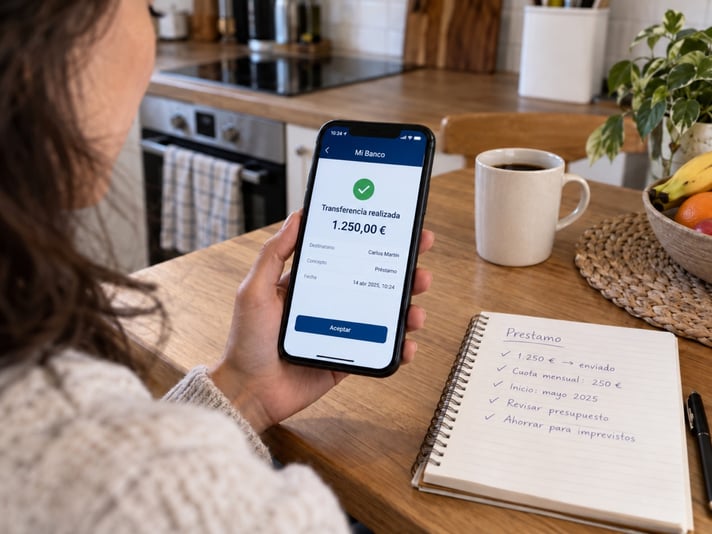
You lent money to a friend, a family member, or a shareholder. Nothing was signed, because at the time no one thought it would be necessary....
+ Info →
Debtors Lists (Ficheros de Morosos) arguably play an important role in reducing unpaid debts by providing motivation for debtors to pay and ...
+ Info →
When we issue an invoice to a client, we are required to include the applicable VAT on that invoice. If the client fails to pay, we can recl...
+ Info →
When a client does not pay, the first decision is not legal but economic: how much it will cost to collect, and how long it will take. Chasi...
+ Info →
+34 932 020 256
+34 932 411 174
info@conesalegal.com
Avda. Diagonal 467, 6-1
08036 Barcelona (Spain)