
.jpg)

The 2022 labour reform aims to guarantee employment stability, transform the labour market, and curb the abusive, unjustified and disproportionate use of temporary contracts.
This is a positive development in its own right: it promotes sustainable job creation, improves working conditions, and strengthens public social protection systems.
Until now, however, the GREAT FORGOTTEN of the Royal Decree-Law 32/2021, of 28 September, were without question those working in artistic activities, as well as the technical and ancillary activities required to carry them out, workers whose employment relationships are treated as special in nature precisely because of the temporary character of their contracts.
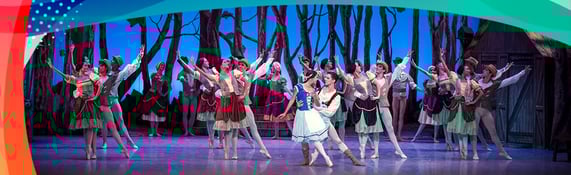
In the case of the regulation governing performing artists, it was not only essential but also urgent to adapt the labour reform, aimed at promoting employment stability and curbing the excessive use of temporary contracts, while paying particular attention to the specific needs of the performing arts sector.
From this perspective, there was already unanimous agreement on the need to improve and update the framework set out in Royal Decree 1435/1985, of 1 August, by bringing within its scope those groups whose working conditions, in terms of temporary and intermittent employment, are comparable to those of performing artists. On top of this, it has now become necessary to incorporate changes in the underlying concepts and models of employment contracting.
The objectives of adapting Royal Decree 1435/1985, of 1 August, are therefore as follows:
a) The introduction of a purpose-built fixed-term contract that addresses the sector's specific circumstances with appropriate legal certainty and safeguards, covering both the grounds for use and contract duration, while ensuring that it cannot in any circumstances be used to meet permanent, structural workforce needs (ruling of the Supreme Court of 7 September 2021, Appeal No. 1158/2019).
b) The extension of the personal scope of this special employment relationship to include technical and support staff engaged in professional activities closely linked to the performing arts and sharing the same conditions of temporary and intermittent employment, excluding, for the reasons set out above, staff employed to meet permanent and structural needs, who must be brought within this regulatory framework in order to ensure they receive adequate protection.
c) The recognition that, outside those artistic activities of a temporary nature that justify the appeal to the aforementioned fixed-term contract, employment must be on an indefinite basis, either through a standard permanent contract or a permanent seasonal contract.
In short, this regulatory framework has at last been brought into line with the requirements of causality, protection of workers' rights, and the limitation of abusive fixed-term contracting, most notably through the amendment of Articles 3 and 5 of Royal Decree 1435/1985, of 1 August:
"Article 3, Form of contract
One. The contracts provided for in this Royal Decree must be made in writing, regardless of their type or duration.
Two. Regardless of the duration of the employment relationship, the company must inform the worker in writing of the essential elements of the contract and the principal conditions governing the performance of the work, provided that such elements and conditions are not already set out in the written employment contract.
Matters not covered by this article shall be governed by Article 8 of the Workers' Statute.»
"Article 5, Duration and types of employment contract
One. The employment contract of artists working in the performing arts, the audiovisual sector, and music may be concluded on an indefinite or fixed-term basis.
Two. The fixed-term artistic employment contract, which may only be entered into to cover the company's temporary needs, may be concluded for one or more performances, for a specified period, for a season, for the duration of a production's run, or for the duration of the various phases of a production. Successive extensions of a fixed-term artistic employment contract may be agreed, provided that the company's temporary need that justified its conclusion continues to exist.
For a legitimate ground for temporary employment to be deemed to exist, the contract must precisely set out the enabling ground for the temporary engagement, the specific circumstances justifying it, and the connection between those circumstances and the intended duration.
Three. The contracts referred to in paragraph two of this article may also be used to engage technical and auxiliary staff who carry out activities directly and exclusively in connection with the performance of the work that justifies the artistic contract, unless those activities form part of the employer's structural or permanent operations.
Four. Workers engaged in breach of the provisions of this article shall acquire permanent employee status. Permanent status shall likewise be acquired by workers who have not been registered with Social Security, or in cases of successive fixed-term contracts, including artistic employment contracts for performers, technicians or auxiliary staff, under the terms set out in paragraphs 4 and 5 of Article 15 of the consolidated text of the Workers' Statute."
For further information, our team of professionals is at your disposal.