
We have spent several years representing marble workshop companies and workers affected by silicosis. After numerous court hearings and inspections, we have reached certain conclusions that we wish to share, conclusions that are also clearly reflected in the documentary "La silicosis del siglo XXI" (21st-Century Silicosis), presented by Lorenzo Milà.

What causes silicosis?
In recent years, the main cause of silicosis as a occupational illness has been the introduction of engineered stone products such as Silestone, Compac, Caesarstone, and Okite, manufactured by companies including Cosentino and Levantina, because when these materials are cut or worked, they release fine particles of a size that can be inhaled and remain suspended in the air.
Silicosis was already a known disease in the stone industry, but cases were rare, because until the arrival of these new materials, workers handled natural stone with a relatively low silica content (between 15% and 30%). By contrast, these engineered materials contain between 95% and 97% silica.
Furthermore, those previously affected tended to be of advanced age. We are now seeing young people aged 25, 30, and 40 already diagnosed with silicosis, and in virtually all cases, they have worked primarily with quartz-based engineered stone.
Can I bring a claim against the manufacturer?
It is our view that, both in claims for benefit surcharges and in damages actions, the court should examine whether the manufacturer has properly complied with Article 41 of the Spanish Occupational Risk Prevention Act. This means assessing whether the manufacturer has fulfilled its duty to provide accurate information about the composition and hazards of the product, as well as the necessary and appropriate protective measures.
In addition, the employment tribunals should recognise the broad jurisdiction of the employment jurisdiction in these cases, thereby avoiding the need for claimants to pursue proceedings across multiple jurisdictions. Among other reasons, such a jurisdictional odyssey costs time and money that marble workshop companies simply cannot sustain, and it effectively enables manufacturers to avoid being brought to justice.
Rulings such as that of the Provincial Court of Vizcaya, Section 2, ruling 90109/2017 of 2 May 2017, Case No. 26/2017, which upheld the ruling of Criminal Court No. 1 of Bilbao, ruling 293/2016 of 30 October 2016, Case No. 236/2014,, even though they resulted in acquittals on grounds of limitation, confirm that the engineered stone manufacturer, in this case Cosentino, was found liable for deficiencies in the information provided in its safety data sheets.
What types of silicosis are there?
This Spanish Ministry of Labour website provides very clear explanations of the different types of silicosis:
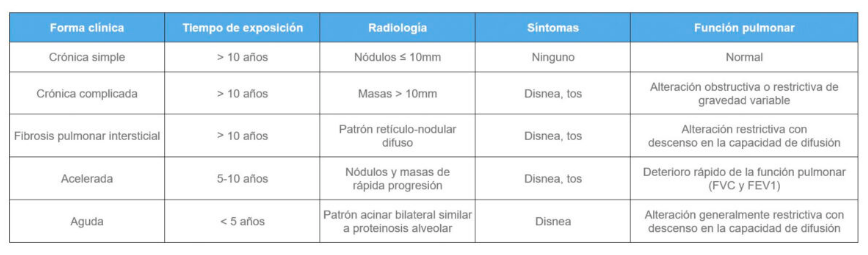 Simple silicosis is the most common form.
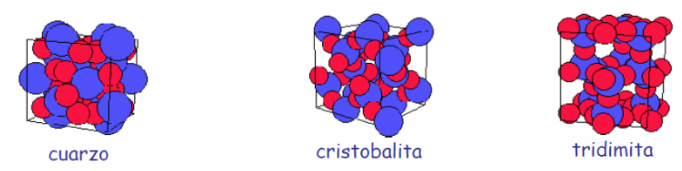
The difference between quartz, silica, crystalline silica and cristobalite
The same Ministry of Labour page on types of silica offers a very useful breakdown of silica types:
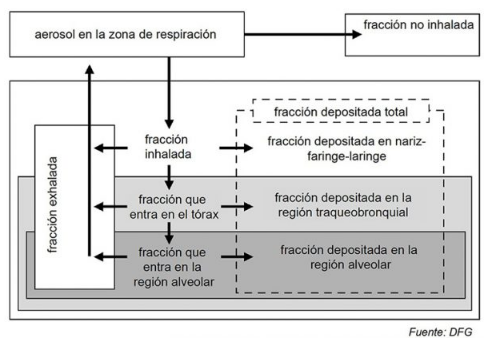
The key point is that the respirable fraction is what causes occupational illness, because the particles are so small that they are able to bypass the respiratory cilia, the hair-like structures lining our lungs that act as a natural defence against microbes and environmental particles.

How long does it take to develop silicosis?
According to the same Ministry of Labour guidance, it is essential to establish how many years the employee was exposed to silica dust.
Cumulative silica dose = Concentration of respirable dust in mg/m³ × Percentage of free silica × Number of years of exposure.
Are Occupational Health and Safety Services liable in silicosis cases?
If occupational health and safety services have failed to carry out their duties properly, for example, by not identifying this risk in their risk assessments, they may well be held liable. A separate question is whether that liability will fall under employment jurisdiction or civil jurisdiction.
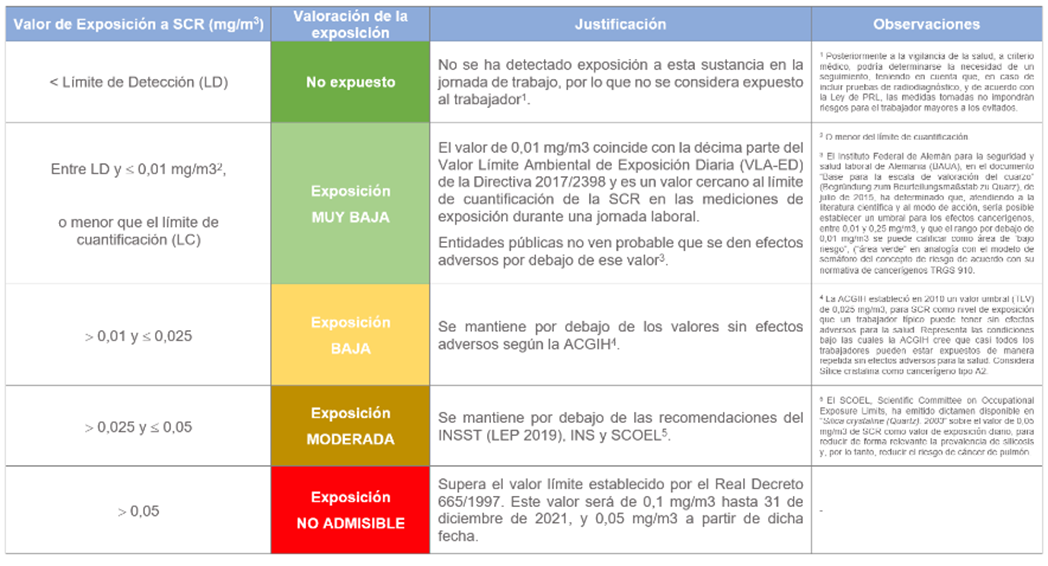
What is clear, in our view, is that occupational health and safety services, the long-established stone masonry sector, and the legislature itself were all caught off guard by the introduction of engineered marble composite products to the market. This is evidenced by the fact that even the law changed the exposure limit, raising it from 0.05 mg/m³ to 0.1 mg/m³ with effect from 31 December 2021.
This is therefore a clear indicator that both the safety data sheets and the hazard assessment for these products were fundamentally inadequate from the very moment engineered composite products entered the market.
Does public liability insurance cover occupational illness claims arising from silicosis?
The vast majority of installation workshops are limited liability companys, typically employing between 5 and 10 workers who handle the materials directly, predominantly engineered quartz composites.
These businesses are facing significant damages claims as well as substantial benefit surcharge assessments. What makes the situation particularly troubling is that their insurance policies do not cover occupational illness, and the benefit surcharge itself cannot be insured against, as this is expressly prohibited by law.
Sadly, many workers ultimately receive no compensation whatsoever for the harm they have suffered, because the companies against whom rulings are issued, often for very substantial sums, file for insolvency proceedings, which also leads to the termination of the remaining employees' contracts.
- If you are an employee and would like to understand how to bring a claim for damages, please follow this link for further information.
- If you are a company and would like to know how to defend yourself against damages claims and benefit surcharge assessments, please follow this link.
- If you would like further information on the benefit surcharge or would like us to calculate the surcharge amount, please click the relevant link.