
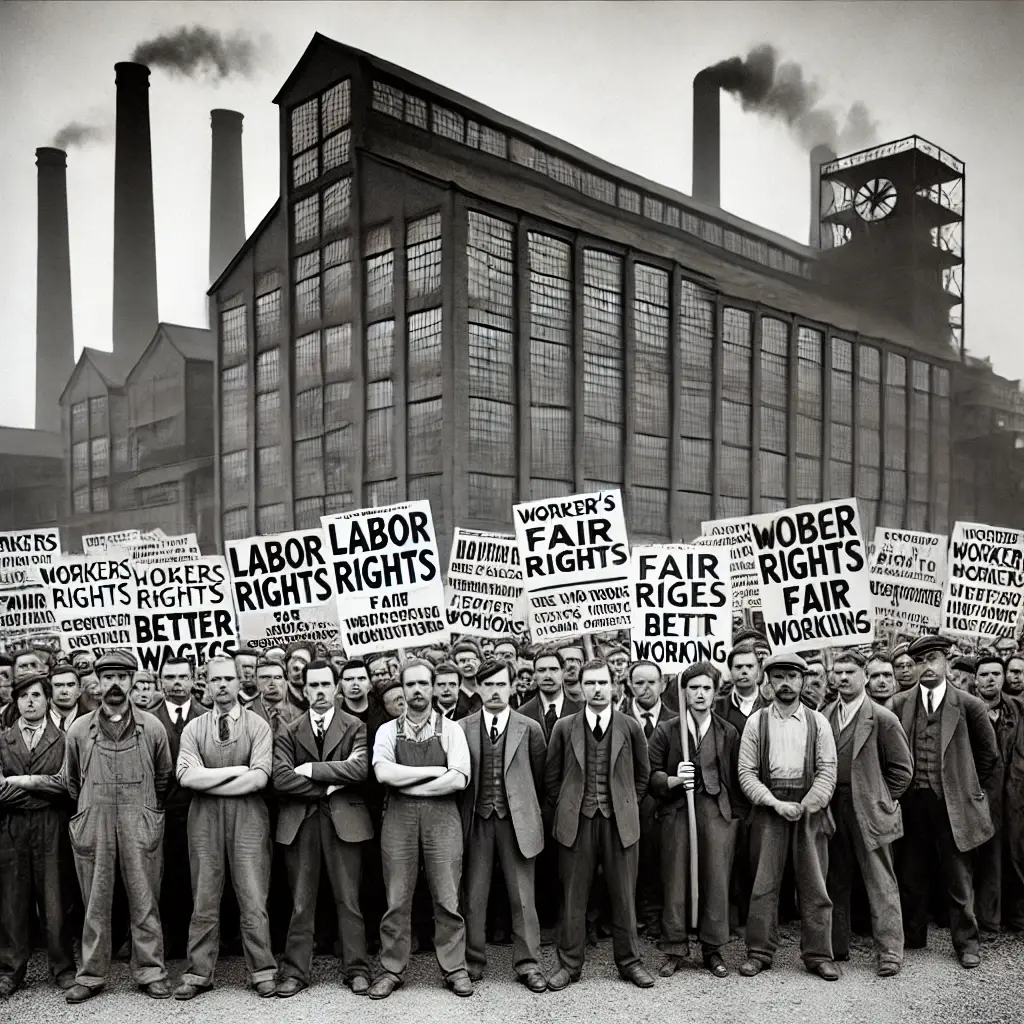
We explain in detail the trade union rights of employee representatives (RRTT).
Article written by our employment lawyer Josep Conesa.


Article 68 of the Workers' Statute sets out the following guarantees for Employee Representatives, whether members of the works committee or staff delegates, which may be extended by collective bargaining agreements:
- The right to a contradictory disciplinary procedure in the event of sanctions for serious or very serious misconduct, in which not only the individual concerned but also the works committee or the remaining staff delegates must be heard.
- Priority of retention within the company or workplace over other employees in the event of suspension or termination on technological or economic grounds.
- Protection against dismissal or disciplinary action on account of their representative activities, both during the exercise of their mandate and for the year following its expiry, except:
- where the mandate ends by way of revocation or resignation,
- in the case of disciplinary dismissal.
- Likewise, they must not be discriminated against in their economic or professional advancement on account of the performance of their representative role.
- The right to express their opinions freely, collectively, where a works committee is involved, on matters falling within the scope of their representation, and to publish and distribute, without disrupting the normal course of work, publications of labour or social interest, giving prior notice to the company.
Trade union credit hours: how many hours union representatives are entitled to
Staff delegates or works committee members elected in trade union elections are guaranteed the right to a monthly bank of paid hours, for each of them at each workplace, for the exercise of their representative functions.
It should be noted that the Supreme Court has established that the company may request general information on employee representatives' use of their paid time credit: ruling Fourth Chamber 903/2024, of 11 June 2024, appeal 472/2021
The number of hours available to them must follow this scale:
- Up to one hundred employees, fifteen hours per month.
- From one hundred and one to two hundred and fifty employees, twenty hours per month.
- From two hundred and fifty-one to five hundred employees, thirty hours per month.
- From five hundred and one to seven hundred and fifty employees, thirty-five hours per month.
- From seven hundred and fifty-one onwards, forty hours per month.
It may be agreed in a collective bargaining agreement to pool the hours of the various members of the works committee and, where applicable, of the staff delegates, consolidating them in one or more of its members, without exceeding the overall maximum, and the member or members concerned may be fully released from work without any reduction in remuneration.
Rights to information and consultation
Article 64 of the Workers' Statute sets out the rights to information and consultation and the powers of employee representatives, granting them the right to be informed and consulted by the employer on:
- any matters that may affect employees,
- the situation of the company
- developments in employment within it
The following terms are defined as follows:
- information means the transmission of data by the employer to the works committee of the company, so that it may become aware of a specific matter and proceed to examine it.
- consultation means the exchange of views and the opening of a dialogue between the employer and the works committee of the company on a specific matter, including, where applicable, the prior issuance of a report by the committee.
It is understood that:
- the employer and the works committee of the company must act in a spirit of cooperation, in fulfilment of their mutual rights and obligations, taking into account both the interests of the company and those of the employees.
What information must be provided to employee representatives
Quarterly:
- General trends in the sector to which the company belongs.
- The financial position of the company
- Recent and likely future developments in the company's activities, including any environmental measures with a direct impact on employment,
- Recent and likely future trends in production and sales, including the production programme.
- The employer's plans for entering into new contracts, indicating the number of contracts and the types and arrangements to be used, including part-time contracts, the performance of supplementary hours by part-time employees, and subcontracting arrangements.
- Statistics on:
- absenteeism rates and their causes,
- workplace accidents and occupational illnesses and their consequences,
- accident frequency rates,
- periodic or special studies of the working environment,
- the preventive mechanisms in use.
Annually
- The application within the company of the right to equal treatment and equal opportunities between women and men
- The pay register
- Data on the proportion of women and men at the various professional levels
- Measures adopted to promote equality between women and men within the company
- Implementation of the equality plan, where one exists.
On a regular basis
- Access to the balance sheet, profit and loss account, annual report, and, where the company is structured as a company with shares or equity interests, any other documents made available to shareholders, on the same terms as those shareholders.
- Access to the standard written employment contract templates used within the company, as well as documents relating to the termination of employment relationships.
- To be informed of all sanctions imposed for serious misconduct.
- To be informed by the company of the parameters, rules and instructions underpinning any algorithms or artificial intelligence systems that affect decision-making capable of influencing working conditions, access to and retention of employment, including the use of profiling.
When required
- The right to be informed and consulted on the employment situation and workforce structure within the company or workplace, as well as to receive quarterly updates on likely developments in this area, including consultation when changes are anticipated.
- The right to be informed and consulted on all decisions by the company that could bring about significant changes to the organisation of work or to employment contracts within the company.
- The right to be informed and consulted on the adoption of any preventive measures, particularly where there is a risk to employment.
Right to issue a prior report on:
The Works Council has the right and obligation to issue a report within a maximum of fifteen days (from the date on which the relevant information was requested and provided) on matters such as:
- Workforce restructuring and total or partial, permanent or temporary, cessation of operations.
- Reductions in working hours.
- Total or partial relocation of the company's facilities.
- Mergers, takeovers or changes to the legal status of the company that may have any impact on the level of employment.
- Vocational training plans within the company.
- The introduction and review of systems for organising and monitoring work, time-and-motion studies, the establishment of bonus and incentive schemes, and job evaluation.
How information must be provided in such cases:
- in a manner and with content that are appropriate to enable workers' representatives to carry out a proper examination and, where applicable, to prepare for consultation and to issue their report.
- at an appropriate time and with appropriate content,
- at the relevant management and representative level within the company,
- enabling representatives to meet with the employer,
- enabling representatives to obtain a reasoned response to any report they may submit,
- enabling representatives to compare their views and opinions with a view to reaching a possible agreement,
- enabling the employer to be aware of the works council's position when making or implementing decisions.
Other Rights:
To carry out functions of:
- Monitoring compliance with applicable rules on employment, Social Security and labour matters, as well as all other agreements, conditions and company practices in force within the company, and where appropriate, taking the relevant legal action before the employer and the competent bodies or courts.
- Monitoring and overseeing health and safety conditions in the workplace within the company.
- Monitoring respect for and application of the principle of equal treatment and equal opportunities between women and men, particularly in relation to pay.
- Participating, as determined by the collective bargaining agreement, in the management of employee welfare schemes benefiting workers or their families established by the company.
- Working with the management of the company to promote all measures aimed at maintaining and increasing productivity, as well as the environmental sustainability of the company, where this has been agreed in collective bargaining agreements.
- Working with the management of the company to establish and implement work-life balance measures.
- Keeping those they represent informed on all matters that directly or indirectly have, or may have, an impact on employment relations.